
Cat & Dog Desexing in Surry Hills NSW for calmer, healthier pets
Desexing prevents unwanted litters, reduces hormone-driven behaviours, and lowers the risk of several diseases. At Vets On Crown in Surry Hills NSW we offer both traditional and laparoscopic keyhole spays, with tailored anaesthesia and pain control for a smooth recovery.


Last Updated: 01 November 2025
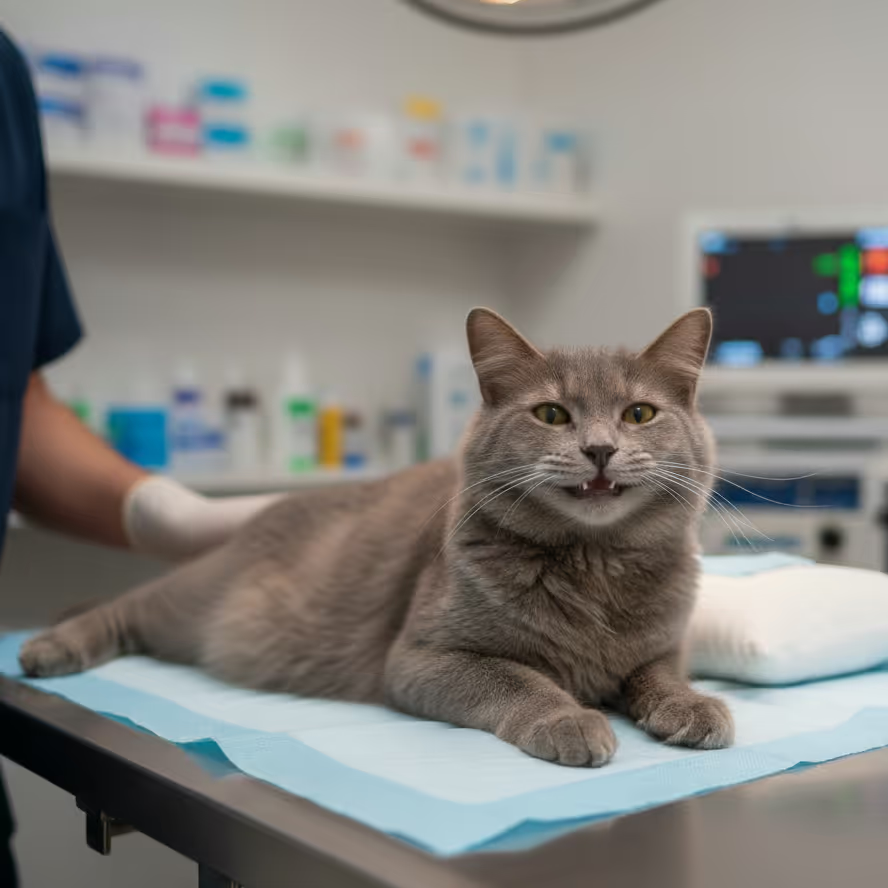
What desexing is and why it matters
Desexing is a routine surgery that removes the ovaries and uterus in females spay or the testicles in males neuter.
BENEFITS:
Prevents pyometra in females and testicular cancer in males
Reduces roaming, urine marking and yowling
Lowers risk of mammary cancer when females are spayed before first heat
Supports a calmer temperament at home
GOOD TO KNOW
Your pet’s personality stays the same. Appetite can increase after surgery, so we guide feeding and activity to keep weight steady.
When we recommend desexing
| Situation | Our Guidance |
|---|---|
| Cats | Desex at 4 to 5 months to prevent early heats |
| Small and medium dogs | Around 5 to 6 months onc vaccinations are complete |
| Large and giant dogs | Often 8 to 12 months sometimes up to 18 months based on breed and joints |
| Female in heat | Usually wait around 4 weeks after the cycle ends |
| Behavior or roaming concerns | Book sooner for safety and neighbourhood harmony |
How to prepare and what to expect
Checklist before your visit
- No food after 10 pm the night before unless we advise otherwise
- Water is fine overnight, remove in the morning
- Give regular medicines unless we ask to hold a dose
- Secure carrier for cats, lead for dogs. Arrive a little early.
Visit Timeline
- Check in and nurse triage
- Vet exam and consent
- Sedation, IV catheter, tailored anaesthesia and continuous monitoring
- Surgery
- Pain Relief and warm, quiet recovery
- Same-day discharge with home instructions
Aftercare
- Quiet rest for 10 to 14 days. Short leash walks only
- Use the cone or recovery suit to stop licking
- Keep the incision clean and dry. No baths or swimming
- Offer a half meal the first night. Normal meals next day
- Call us for swelling, discharge, ongoing pain or if your pet will not eat
Frequently Asked Questions
Desexing is the general term. Spay is the female surgery. Neuter castration is the male surgery.
Cats at 4 to 5 months. Most small and medium dogs at 5 to 6 months. Large breeds are often 8 to 12 months. We will tailor the plan.
Hormone-driven behaviours such as roaming and urine marking usually reduce. Core personality does not change.
Most pets are bright the next day. Internal healing takes 10 to 14 days. Keep activity low and prevent licking until the recheck.
Only if calories exceed needs. We give feeding and exercise guidance to keep weight healthy.
Most surgeries use dissolvable stitches under the skin. If external sutures are used we remove them at 10 to 14 days.
We usually wait about 4 weeks after the cycle to reduce bleeding risk. Ask us if timing is urgent.
With a vet exam, blood tests when advised, and monitoring, modern anaesthesia is very safe. We customise drugs and doses
If you cannot prevent mating, or you see scrotal swelling after neuter, wound opening, fever, or your pet refuses food for 24 hours, contact us for same-day advice.
Gentle anaesthesia, clear aftercare, and transparent costs.
Book desexing or call to discuss timing.
.svg)
